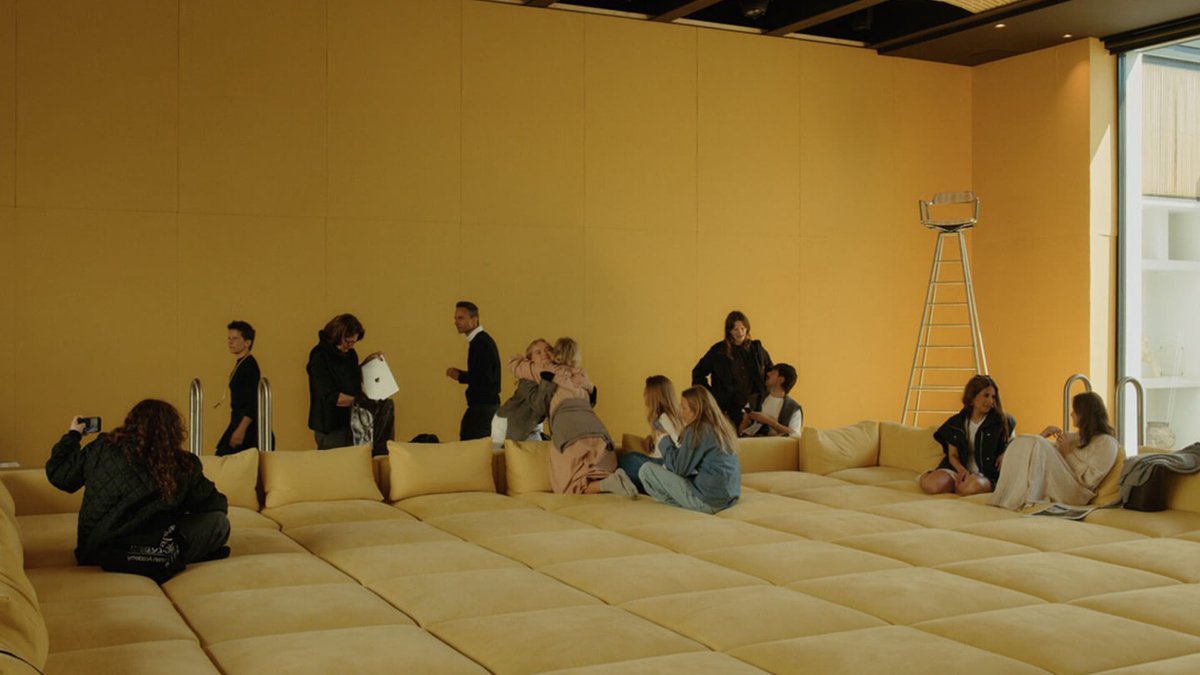
At Copenhagen Design Week, connection took precedence over commerce as 3daysofdesign expanded its footprint while prioritizing human engagement over market saturation.
The 2026 edition featured 572 exhibitions and nearly 900 events across Copenhagen, a significant jump from roughly 600 events the previous year.
For a festival long defined by its intimacy, 3daysofdesign sits at a critical inflection point.
The fair now attracts lifestyle brands alongside traditional design players, creating a challenge for visitors to separate hype from substance.
Organizers face a difficult decision: double down on rapid growth or rein in the scope to retain the authenticity that originally defined the program.
Despite the increase in scale, the event avoided the high-pressure atmosphere of Milan.
Related: Kéré Architecture Constructs Vertical Playground for Munich Kindergarten
Instead, many brands opted for quieter presentations.
This could be interpreted as a recession-driven retreat toward safety, but the choices made at the fair suggest a deeper commitment to longevity.
Rather than chasing endless novelty, brands leaned into comfort and adaptability, reflecting the grounding principles of the Scandinavian design scene.
Playful Spaces and Sensory Experiences
The city became a laboratory for play and mindfulness.
At Tarkett, Christian + Jade draped deep black linoleum into furniture that appears to peel from the wall and floor.
Yinka Ilori used recyclable carpet tiles to create a color-soaked room for pause and play, hosting meditation sessions within a tactile setting of surfaces.
Related: The Benefits of Asphalt Maintenance for Long-Term Pavement Performance in Rockwall
These installations highlighted a shift away from overintellectualized design toward activations that foregrounded human experience.
Sensory immersion defined much of the week.
Fritz Hansen teamed up with Technics to create a listening room in its flagship store, pairing a deep burgundy turntable with a matching KAISER idell lamp.
Frama’s exhibition featured scent sculptures that gave aroma a spatial form, while Bankston turned architectural hardware into a study of touch.
These sensory details turned the city into a multi-sensory gallery.
Hospitality also took center stage, with Karimoku Case serving matcha in ceremonial fashion and Service Projects popping up in local cafés to let visitors experience their products in use.
