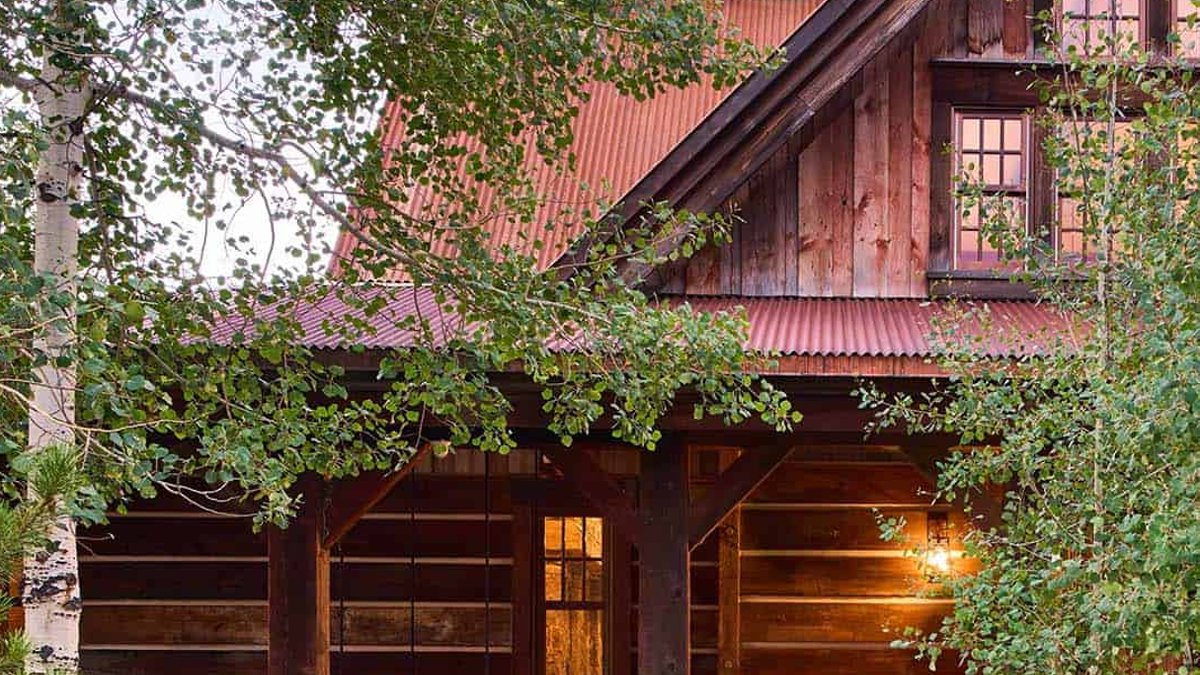
The owners of a 30-year-old log cabin outside Steamboat Springs, Colorado, sought a home that felt timeless yet suited their lifestyle.
Denver-based Duet Design Group accepted the task without altering the structure. The 7,000-square-foot residence sits on 150 acres, its original log framework preserved while modern elements were added to create what the designers describe as a refined take on Colorado mountain style.
Warmth without cliché
The foyer establishes the atmosphere. Rustic chinked walls remain, but the color scheme shifts to muted teal and sienna throughout the home. A custom-upholstered chest in Cowtan & Tout fabric anchors the space, connecting old and new.
In the great room, reclaimed wood beams meet contemporary furnishings. Iron-and-maple console tables by Charleston Forge stand beneath a Roll & Hill chandelier. A nearby seating area includes navy leather armchairs and an ottoman in Schumacher fabric, showing that comfort doesn’t require clutter.
The dining space adopts contrast. Leather-upholstered chairs in Kravet’s Sundried Red fabric surround a table, while a David Yarrow photograph, Bonnie, hangs on the wall. The piece demonstrates that art in a log home can extend beyond traditional scenes.
Modern comforts, rustic bones
The kitchen and adjacent bar blend function and luxury. Distressed cabinetry, marble countertops, and a mosaic backsplash give the bar character, while the kitchen’s leather bar stools and sleek appliances keep it current. Original reclaimed timbers, once structural, now serve as a visual foundation. Their weathered surfaces are softened by modern lighting and textiles.
Upstairs, the primary bedroom balances scale and intimacy. A four-poster bed by Theodore Alexander dominates the room, flanked by Made Goods nightstands and Currey & Company lamps. Above the bed, a triptych of Magnificent Stag photographs from Trowbridge Gallery adds wilderness without becoming overdone.
The bathroom continues the approach. Wall sconces by Visual Comfort cast a warm glow over stone surfaces, while a copper vessel sink in the powder room introduces subtle elegance.
Guest areas received careful updates. In a lower-level hallway, an antler lamp—a gift from the previous owner—was refreshed with a new shade, preserving the home’s history.
The cabin doesn’t pretend to be older than it is. It adopts its age while adding modern comforts. The result feels both familiar and new, as if the home evolved naturally.
For the owners, livability mattered most. The design team considered how the family gathers, whether around the outdoor fire pit beneath aspen trees, wrapped in Pendleton throws, or in the great room, where furniture encourages lingering. The original structure remains, but the flow now feels deliberate.
Related: Atlanta contractors guide garage conversions to living space
Most mountain homes either rely too heavily on nostalgia or erase it completely. This one avoids both extremes. The teal accents, the mix of leather and linen, and the placement of fine art photography next to reclaimed wood suggest that tradition and modernity can work together. They complement each other when details are chosen carefully.
Outdoor spaces support this idea. The fire pit needed only new furnishings and throws. The existing log walls and aspen trees served as starting points rather than obstacles. The design team treated them as partners in the process.
The approach appears in smaller moments as well. The mosaic backsplash in the bar isn’t just decorative; it invites conversation. The antler lamp in the guest hallway tells a story. Even fabric choices—Schumacher for the ottoman, Kravet for the dining chairs—reflect attention to texture and durability.
The home’s strength lies in its atmosphere. It feels warm without being oppressive, luxurious without excess. It’s a place where a family might gather for holidays and return later without feeling out of place—not because it hasn’t changed, but because updates were made with purpose.
Managing expectations during such projects can be challenging, but the results here show how thoughtful design preserves character while meeting modern needs. The cabin’s transformation demonstrates how refurbishments can balance old and new successfully.
